
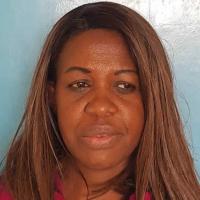
Student Short Biography:
Obongo Rael Akoth Kasera is a research scientist at Kenya Industrial Research and Development Institute (KIRDI) involved both in Research Technology and Innovation (RTI) and in Technology Transfer and Extension Services (TTES) for 13 years. She works in Laboratory Services Centre where she heads Water and wastewater laboratory and is involved in supporting other researchers and SMEs by offering testing services in food and animal feeds, water and wastewater, oils, fuels, soil etc. As a research scientist in love with the environment, she has been involved in issues to do with cleaner production, sustainable development, Environmental Impact Assessment, climate change, energy conservation, water and air pollution as well as water quality and waste water treatment. She is also involved in technology needs assessment, capacity building and technology transfer services as well as development and validation of Standard Operating Procedures (SOPs). She has sat in various committees in the institute among them ISO, Safety Health and Environment(SHE),Kirdi Research Committee(KRC), Alcohol and drug abuse as well as National cohesion and integration committee. She is also involved in preparation of standards at National Standards body KEBS where she sits in the technical committee for soil quality. Prior to this she taught mathematics and Chemistry at Mary Leakey Girls high school having graduated from Kenyatta University with a degree in Bachelor of Education Science (Maths and Chemistry). As a teacher she participated in many activities like science conference, symposiums, maths and chemistry contests as well as SMASE (Strengthening of Mathematics and Science Education),a project of Japanese government whose mission was to continuously develop competencies for sustainable development through STEM education. She also studied management course IMIS-UK (Institute for the Management of Information System) becoming a licentiate member.She has also been involved in seminars and trainings both in-house and external on ISO 9000; 2005-Quality Management Systems, ISO/IEC 17025-Testing and calibration laboratories, internal auditing for laboratories, kaizen (Continuous improvement), proposal writing among others.
Project Summary
Thesis/project Title; Determination of Effectiveness of Luffa Cylindrica as an adsorbent in removal of heavy metals from wastewater
ABSTRACT
This piece of work reports the sorption properties of Luffa Cylindrica that have not been exploited and carbon from luffa to remove copper and chromium ions from aqueous solution. The effect of contact time, adsorbate concentration, particle size, pH, biomaterial dosage and Temperature was investigated. Particle size A (<425) gave the best adsorption values. Increase in concentration of metal ions resulted in decrease in % adsorption of the adsorbate, while increased pH values led to increase in % adsorption for both copper and chromium ions. Increased biomaterial loading also led to increased adsorption for both copper and chromium ions. Desorption studies were done with 0.1M concentrations of H2SO4, HCl and EDTA. It was noted that for copper, H2SO4 was the best followed by HCl and finally EDTA. Chromium on the other hand was best desorbed by EDTA but H2SO4 was still better than HCl. Luffa-metal ion bond and EDTA-metal ion bond played a significant role in the desorption capability of EDTA. The regenerated biomaterial was then subjected to another set of adsorption experiments to study the effect of concentration of the metal ion on adsorption and for both copper and Chromium, EDTA treated biomaterial gave higher adsorption percentages. Luffa sponge was also carbonized and 0.5g, 0.75g and 1g portions of carbonized biomaterial was used to determine the effect of concentration of both Copper and Chromium ions on their adsorption onto the carbonized biomaterial. Carbonized biomaterial gave higher adsorption percentages than fresh Luffa.30ml portions of real effluent samples from KIRDI’S leather division was treated with 0.5g and 2g portions of fresh Luffa to determine its efficacy in removal of Chromium. 2g portions were able to remove over 92% of Chromium from the effluent. Two adsorption isotherms were tested and Langmuir gave the best fit for chromium and copper, copper giving R2 value of 0.9570 and Chromium R2 value of 0.9728. qmax value, the monolayer adsorption capacity for copper using fresh luffa was found to be 2.9753mg/g, and b the Langmuir constant was found to be 0.1933l/mg. qmax for Chromium was found to be 1.3466mg/g and b Langmuir constant was found to be 0.6639l/mg.This means Luffa Cylindrica has a higher affinity for copper than chromium. The experimental data from carbonized biomaterial was also fitted to Langmuir isotherm. The R2 value for copper was found to be 0.9826 and qmax value of 5.4288mg/g, 1.8 times that of fresh luffa. R2 value for chromium with carbonized Luffa was found to be 0.9144 with qmax value of 2.3479mg/g which again is almost twice as much as that of fresh Luffa. Freundlich Isotherm gave R2 value 0.8194 for copper which was not close to unity so the data didn’t adhere to the isotherm. Chromium however gave gave R2 value of 0.9501with KF value of 0.5768 and n value of 3.367 indicating good adsorption. This study demonstrates that Luffa Cylindrica could provide a cheaper alternative for removing heavy metals from wastewater.